October 30, 2026 · 3 min read
What Women Wore in the 1890s: From Farm Calico to Sunday Best
By Sky Alexander
Why Clothing Matters in Hattie's Story
When I sit down to write a scene with Hattie Morran, one of the first things I picture is what she is wearing. In the 1890s, clothing said almost everything about a woman before she ever opened her mouth: how much money her family had, whether she lived on a farm or in town, whether she was dressed for work, for church, or for a wedding. For a poor farmer's daughter in Gallatin, Missouri, a dress was not a fashion statement. It was a tool, an investment, and very often something she had made with her own hands.
Getting those details right helps me put readers inside Hattie's world, so today I want to share a little of what I have learned about how women dressed in the 1890s, from the farmyard to Sunday best.
Everyday Dress on a Missouri Farm
Farm women of the period wore practical dresses of sturdy, washable cotton such as calico and gingham. Many owned only a few everyday dresses, and those were mended, let out, taken in, and remade until the fabric simply gave up. A long apron went over the top to protect the dress from flour, grease, garden dirt and the endless work of cooking over a wood stove.
Out in the sun, a sunbonnet shaded the face and neck. Shoes were worn until they could not be patched anymore, and children often went barefoot in warm months. Nothing was wasted. Worn-out dresses became quilt pieces, rags, or clothing for a younger sibling. When I imagine Hattie at the start of Forced to Love, this is the world I see: hard-working, careful, and making do.
For a poor farmer's daughter, a dress was not a fashion statement. It was a tool, an investment, and often something she made with her own hands.
Corsets, Sleeves and the 1890s Silhouette
Even on the farm, the fashionable shape of the decade had its influence. The 1890s are known for a narrow waist, a smooth, flaring skirt, and, by the middle of the decade, the big puffed leg-of-mutton sleeve. Most women wore a corset of some kind, though a working woman's version was usually less severe than what a society lady laced into for a ball.
The decade also saw the rise of the shirtwaist, a tailored blouse worn with a separate skirt. It was practical, it could be mixed and matched, and it became a symbol of the modern working woman. I love details like this because they show a world in motion, caught between old expectations and new ways of living.
Sunday Best and Dressing for Town
Most rural women kept one good dress for church, weddings, funerals and trips to town. It might be wool or a finer fabric in a darker color that hid wear and could be worn for years. A hat, gloves and perhaps a bit of lace or a brooch finished the look. These were the clothes a woman would be seen and judged in, so they mattered a great deal.
Women sewed most of their own clothes, and by this time many households had a treadle sewing machine, which made the work faster. Mail-order catalogs also brought ready-made goods and fabric to rural families who lived far from city shops. Store-bought fashion was within reach for those who could afford it, and for many families that was exactly the dividing line.
Clothes as a Mirror of Changing Fortunes
Because clothing carried so much meaning, it is one of my favorite ways to show change in a character's life. The Fires of Love & Hate follows Hattie from a poor farm into wealth, heartbreak and hard-won independence, and her world looks different at every stage. I find that a single detail, like the feel of a fabric or the weight of a hat, can tell readers more about where she stands than a page of explanation.
It is also a reminder of how my great-grandmother's generation lived. Their clothes were made to last, earned through real work, and worn with pride. Writing about them feels like a small way of honoring that.
Book 1
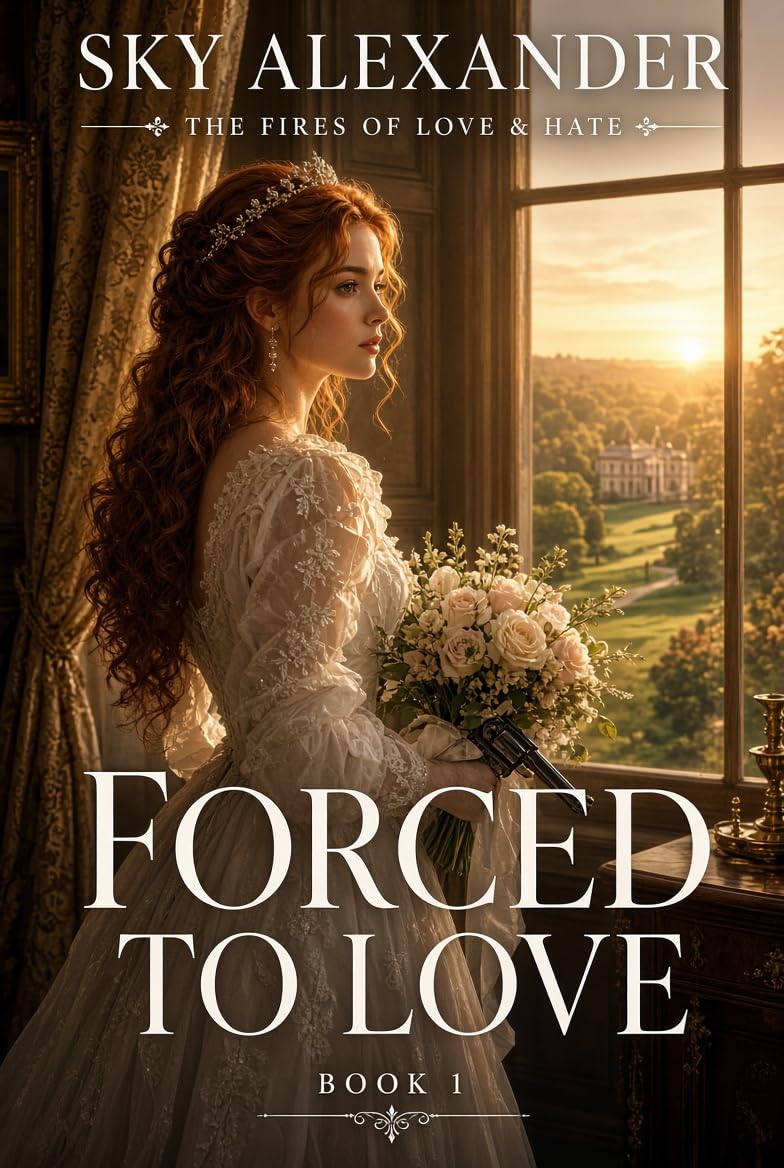
Forced to Love ↗Hattie's story begins on a poor farm in 1890s Gallatin, Missouri, in Forced to Love.
Step Into Hattie's World
If you would like to see Hattie's world for yourself, the story begins with Forced to Love, Book One of The Fires of Love & Hate, and Book Six, Whirl Wind Romance, arrives November 1. You can read the first chapter of Forced to Love free at https://thefiresofloveandhate.com/read-chapter-1.